

Active vs. Passive Socialization
We all desire our puppies to grow into social butterflies, but not all dogs are social by nature. That is why early socialization is so important to help puppies develop into well-adjusted dogs. There are two types of socialization that are critical for puppies – active and passive.
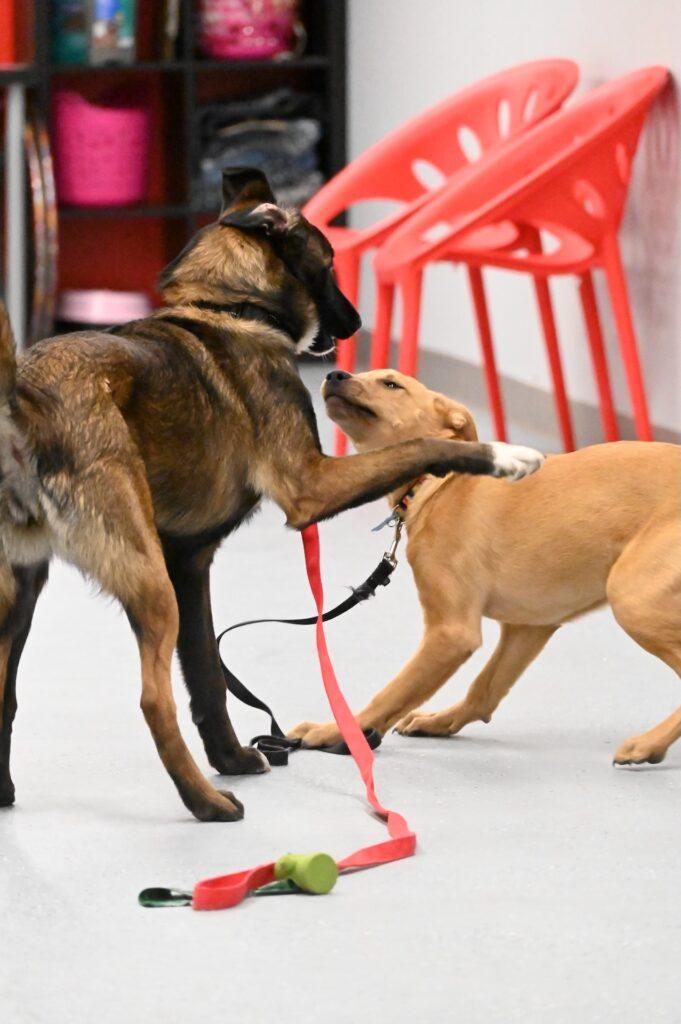
Active socialization involves intentionally exposing a puppy to various experiences, people, animals and environments in a controlled, positive manner. This includes planned interactions, training exercises, and supervised play to build confidence and adaptability. The planned and supervised part of this is key – especially when introducing them to other dogs to help ensure they have positive experiences. Arranging for play dates with owners with dogs you know and trust, or ones that are well supervised with a professional are essential.
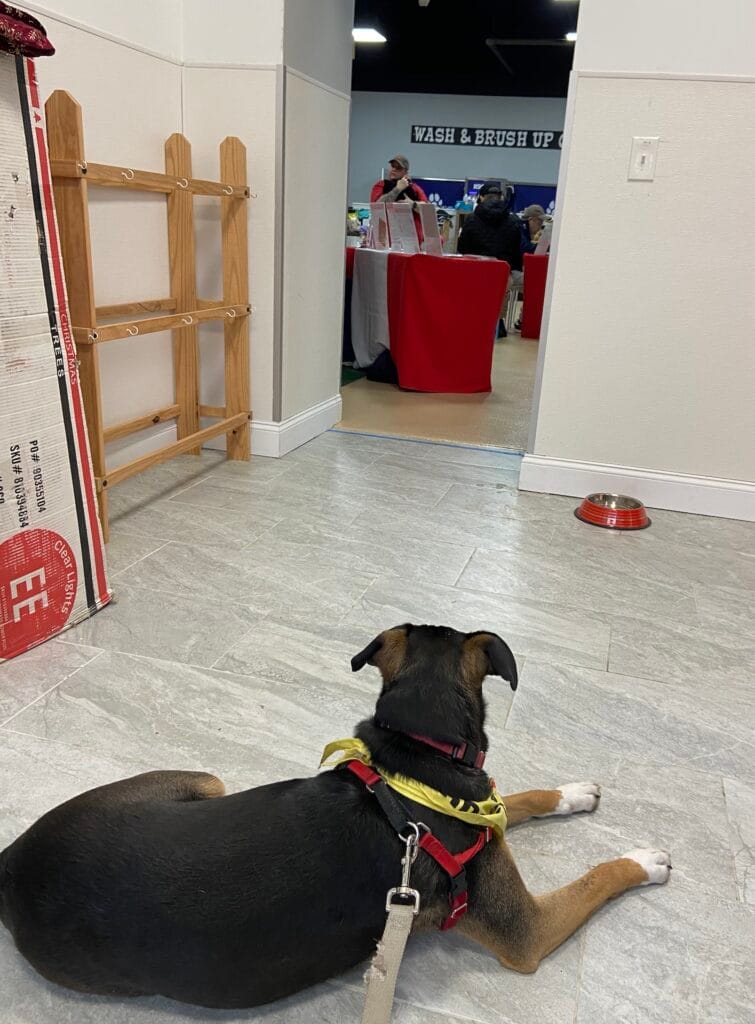
Passive socialization, on the other hand, occurs when puppies observe their surroundings without direct engagement. This can include watching people from a distance, hearing new sounds, or experiencing different environments from a safe space, allowing them to adjust at their own pace. This can be extremely helpful for dogs that are more reserved with the keys here being that they feel safe and can adjust at their own pace.
One example that comes up often in the rescue is with fearful or reactive dogs. It is important to find ways for these dogs to have exposure to the outside world to eventually find their adopters. The rescue is able to gauge the appropriateness of individual dogs to attend certain events with some simply being too much for some dogs – they get beyond their threshold and can either act up, act out or completely shut down, and none of these things are desirable. The idea of passive socialization is to build up a positive association with something while not actively engaging in or with it.
There are so many ways to socialize your dog and it is extremely important to be thoughtful in the process to be able to best set them up for success in the future. Dogs that are forced to do too much too soon or dogs that experience something negative during key developmental periods of their lives may have long lasting impacts that inhibit their ability to enjoyably (and often safely) participate in things that most humans nowadays want to do with their dogs.
When welcoming any new dog into your family, especially puppies, it is important to include both passive and active socialization.